
Packed full of antioxidant-rich ingredients, this homemade elderberry syrup is a powerful remedy to support and boost your immune system through all seasons. Aside from its numerous health benefits, this syrup is simple to make and easy to modify. Take a small amount daily, drizzle over pancakes or ice cream, or use it as a delicious base for infinite recipes like smoothies, gummies, popsicles, and beverages.

Elderberry syrup is a potent and flavorful remedy to give your body the antioxidants and vitamins it needs to build a strong immune system.
We take it daily to help prevent sickness, but it’s also the first thing I reach for any time someone is starting to show symptoms.
I prefer to make it at home instead of buying it from the store because I can control the ingredients I use, and it helps to save money.
If you have never made it before, it’s much simpler than you think. This recipe is so easy to modify with whatever spices you like or have on hand, and it doesn’t require any special equipment.
What Are Elderberries?
Elderberries grow from the elder bush, or Sambucus nigra, which is a shrub that grows throughout most of temperate North America, Europe, and Asia.
For centuries, the berries and flowers from the elder plant have been used as medicine and food to support and stimulate the immune system.
Once cooked down, the elderberries are a delicious ingredient to make everything from syrups, pies, and jams, to more modern recipes like popsicles, smoothies, and gummies.
Benefits of Elderberries
- High in vitamin C and vitamin A, which have antioxidant properties to help prevent cell damage (great for immunity and skin health)
- Packed with anthocyanins and flavonoids, which are natural anti-inflammatory, antiviral, and anticarcinogenic compounds that promote immunity and heart health (and give the berries their rich purple color)
- High in vitamin B6, essential for both the nervous and immune systems
- Contains iron, necessary for healthy blood and immune cell production
- Great source of fiber to support digestive health
- Acts as a natural diuretic to help with fluid retention
Does Elderberry Syrup Really Work?
Because of their antimicrobial, antiviral, and antioxidant properties, elderberries have proven themselves to be an effective and holistic alternative treatment for numerous infections.
- A randomized clinical trial concluded that daily supplementation of elderberry extract significantly reduced the duration and severity of the common cold.
- Another study discovered that elderberry extract can inhibit influenza strains A and B, decreasing the duration of the viral infections by 3 to 4 days.
- Supplementation of elderberry extract has also been shown to substantially reduce upper respiratory symptoms.
- Sinupret, an herbal medication made with elderberry extract, has been clinically proven to reduce the acute signs and symptoms of a sinus infection when used alongside standard antibacterial therapy.
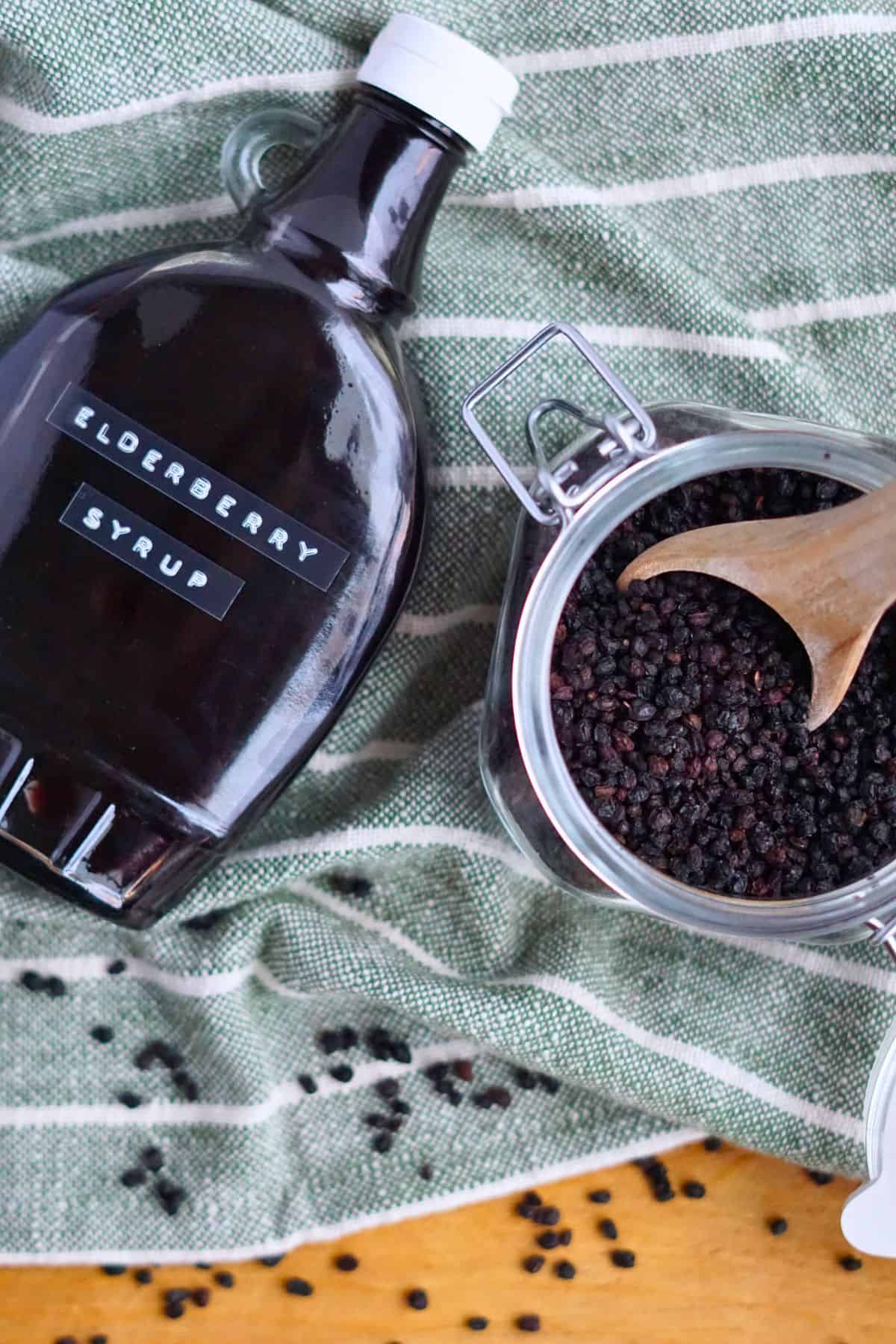
Why You’ll Love This Elderberry Syrup Recipe
Aside from all its wonderful health benefits (and that it really does work), here are some of my top reasons why I choose to make elderberry syrup at home:
- It keeps for up to 3 months in the fridge (use it daily or any time you need it)
- You can use the freshest ingredients for the best medicinal benefits
- You can control the flavor and type of sweetener
- It’s far less expensive than what you can buy in stores
- It’s simple to make and doesn’t require any fancy cooking methods or equipment
How To Make Elderberry Syrup
1. Gather your ingredients
Fresh elderberries are almost impossible to find in stores, so most elderberry syrup recipes use dried elderberries.
I get my dried elderberries in bulk from here.
As you will see, I pack this recipe full of antioxidant-rich ingredients.
They all come together to make the most flavorful and effective syrup, but feel free to experiment with the spices based on your taste preference.
I always go by the notion that fresh and whole is best, especially when it comes to spices and herbs, so that’s what I include in the recipe. Check the recipe notes if you would like to swap in a dried or ground version.
Ingredients:
- Filtered water
- Elderberries – dried, fresh, or frozen. Check the recipe notes to see the cooking instructions for each.
- Cinnamon Sticks – high in antioxidants, increases circulation, and improves tissue repair (super important in times of sickness)
- Whole Cloves – high in manganese and eugenol, both providing antioxidant and anti-inflammatory effects
- Ginger – contains gingerol, a natural antibacterial and digestive aide
- Lemon Peel – high in vitamin C (aids iron absorption) and limonene (strong antimicrobial and antioxidant)
- Raw Honey – antioxidant powerhouse and full of natural vitamins, minerals, and enzymes (it’s a superfood for a reason)

2. Combine all ingredients (except honey) in a pot and bring to a boil
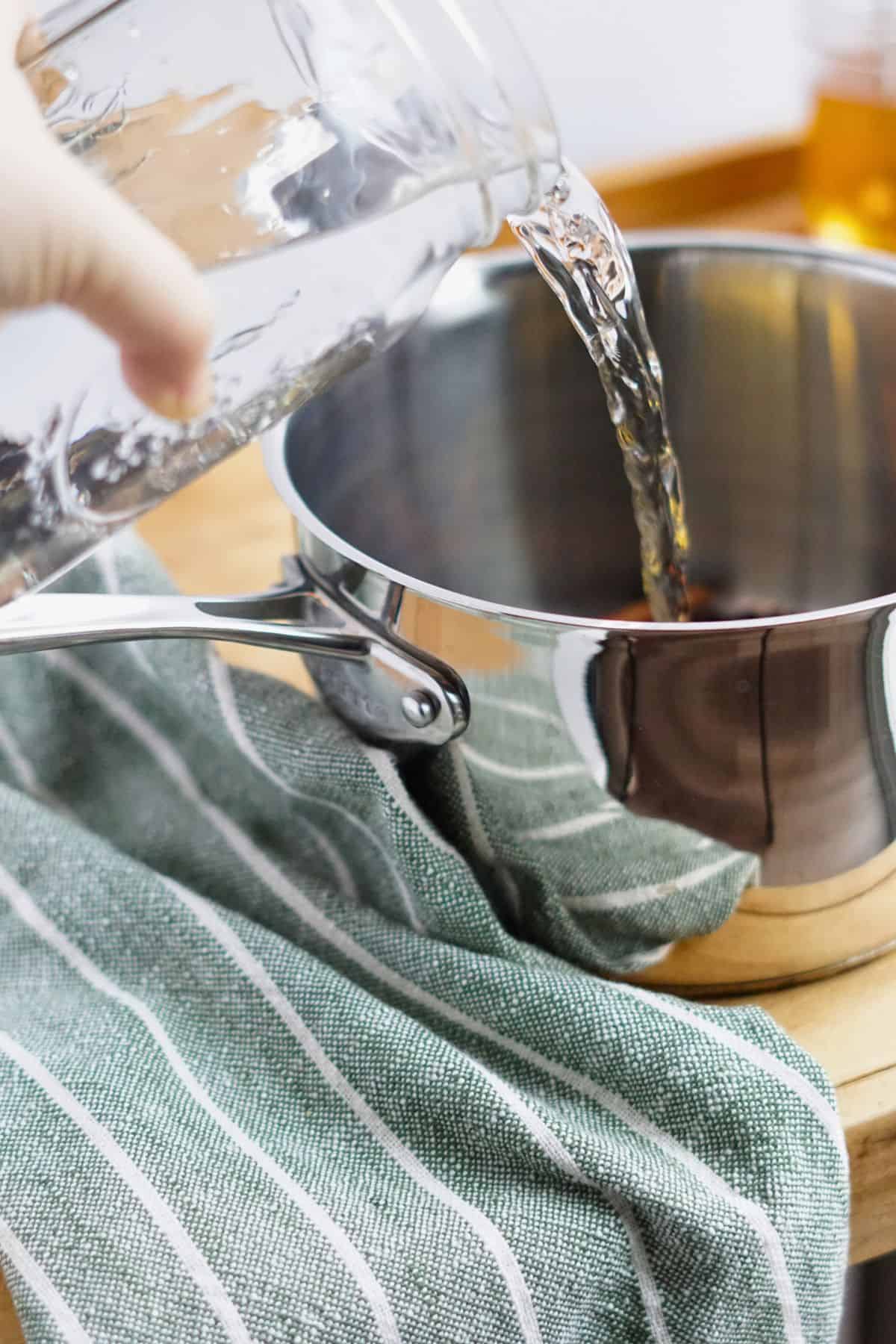
3. Once boiling, reduce heat to low and simmer uncovered for 40-45 minutes until the liquid has reduced by half.
4. Remove from heat and allow to cool until it’s lukewarm.
5. Pour contents through a fine mesh strainer into a glass jar or bowl.

6. With the back of a wooden spoon, press and mash the berries into the strainer to extract as much juice as possible.
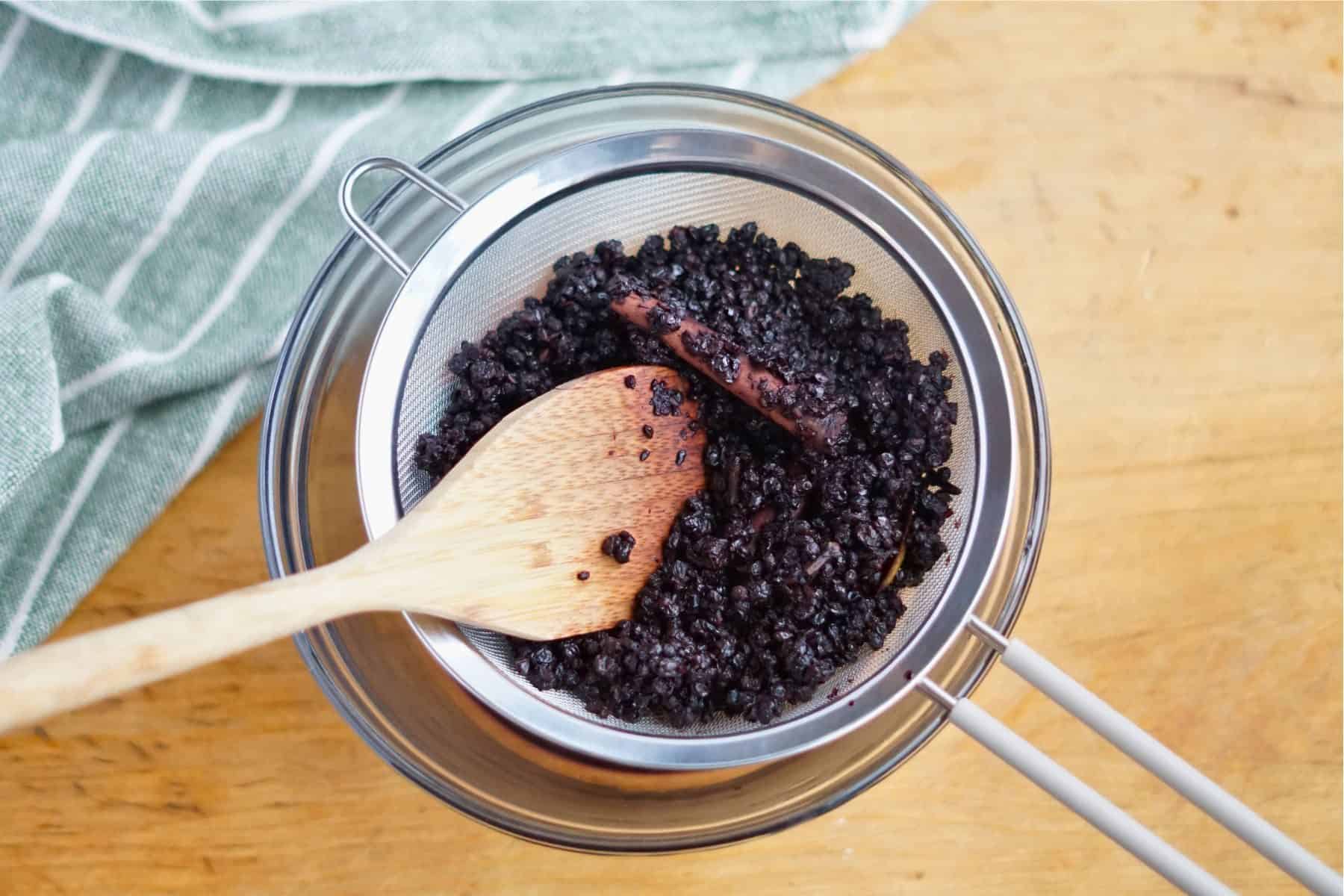
7. Add raw honey and stir well until honey is completely dissolved into the juice.

8. Store in an airtight glass jar or bottle in the fridge for up to 3 months.
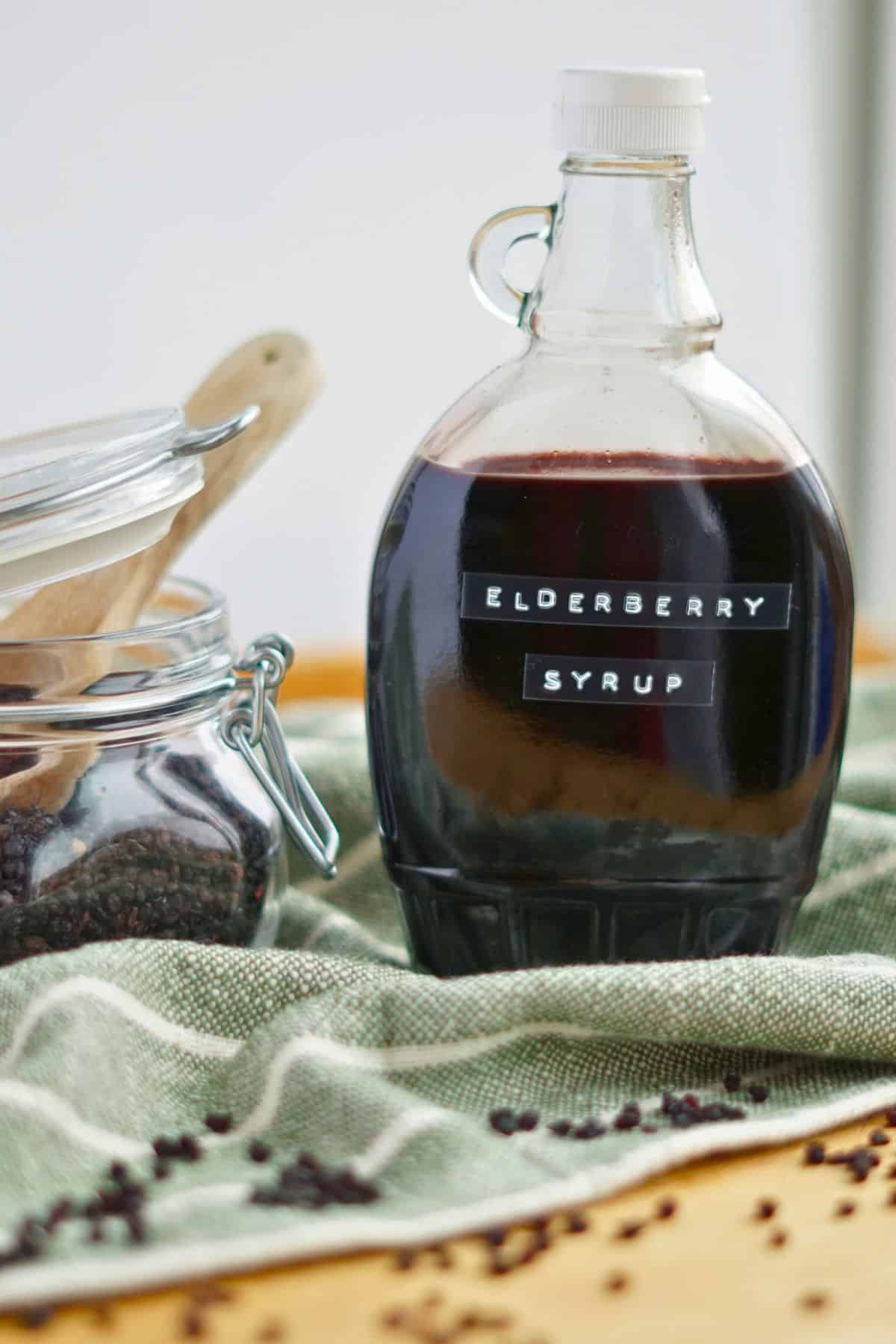
How To Take Elderberry Syrup
Take 1 tablespoon daily (1 teaspoon for kids) to help maintain a strong immune system.
When symptoms arise and during times of sickness, increase dose to 3-4 times a day.
What Can I Use Elderberry Syrup For?
A better question would be, what can’t you use it for? I’m always finding new ways to incorporate it into other recipes.
My favorite ways to use elderberry syrup through all seasons:
- Add to hot water for a quick tea
- Make easy homemade elderberry gummies (my toddler asks for these every day)
- Whip up some tasty immune-boosting popsicles (great for summertime sickness)
- Mix into your favorite fruit smoothie recipe
- Drizzle on pancakes, waffles, oatmeal, or ice cream (because, why not?)
- Pour over ice and add seltzer water for a refreshing summer drink
- Swap it in a cocktail recipe that calls for a fruity syrup
More Elderberry Recipes

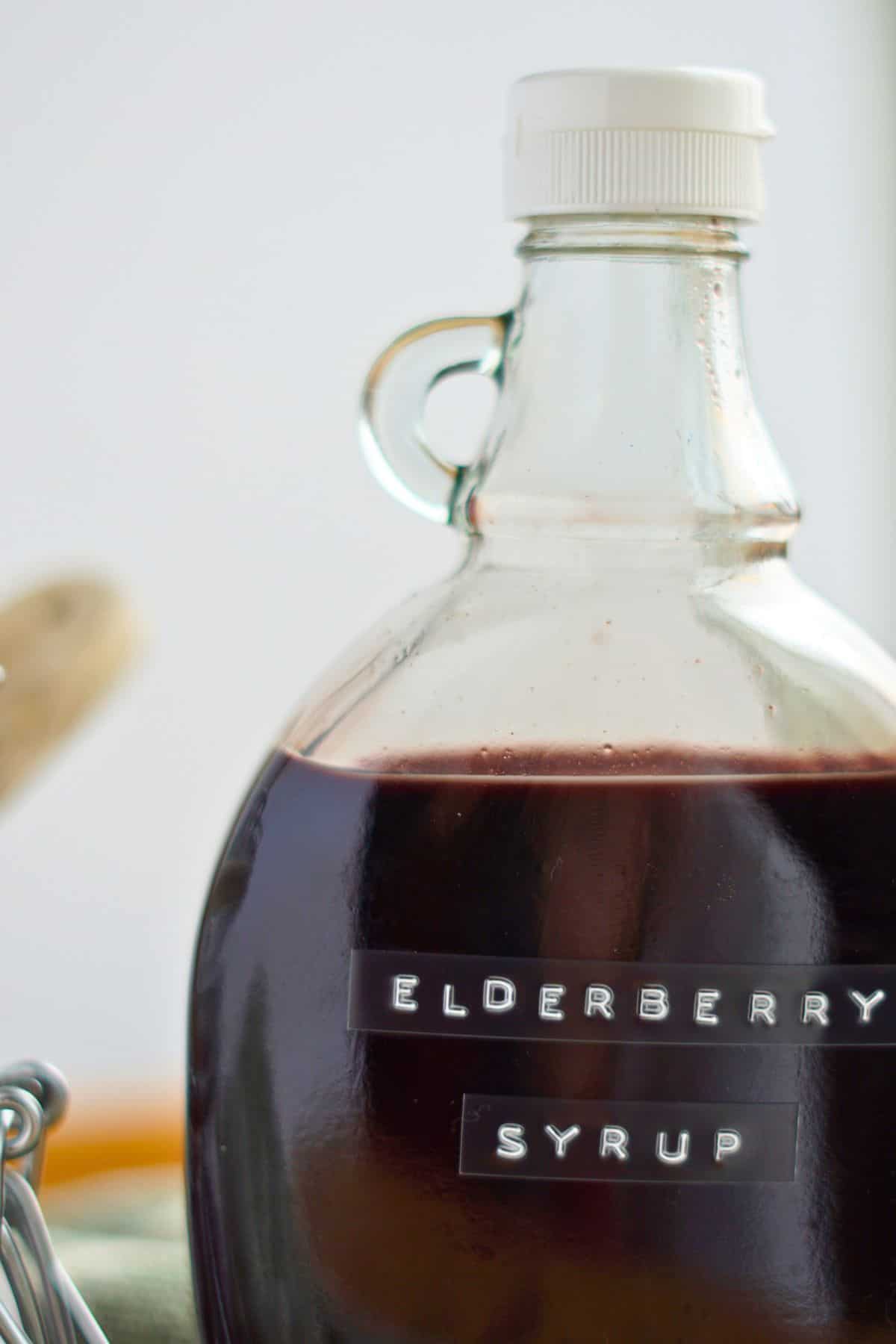
Elderberry Syrup
This homemade elderberry syrup is a powerful antioxidant-rich remedy to support and boost your immune system. It's simple to make and easy to modify. Take a small amount daily, drizzle over pancakes or ice cream, or use it as a delicious base for infinite recipes like smoothies, gummies, popsicles, and beverages.
Ingredients
- 3 1/2 cups filtered water
- 1 cup elderberries
- 2 cinnamon sticks
- 6 whole cloves
- 2 inch knob of ginger, thinly sliced
- peel of half of a lemon
- 1 cup raw honey
Instructions
- Combine water, dried elderberries, cinnamon sticks, cloves, sliced ginger, and lemon peel in a saucepan and bring to a boil.
- Once boiling, reduce heat to low and simmer uncovered for 40-45 minutes until the liquid has reduced by half. If it has reduced before 40 minutes, add a bit more water and lower your heat.
- Remove from heat and allow to cool until it's lukewarm.
- Pour the contents through a fine mesh strainer into a glass jar or bowl.
- With the back of a wooden spoon, press and mash the berries into the strainer to extract as much juice as possible. You can also wrap up the contents in a cheesecloth and squeeze out the juices.
- Add raw honey and stir well until honey is completely dissolved into the juice.
- Store in an airtight glass jar or bottle in the fridge for up to 3 months.
- Take 1 tablespoon daily (1 teaspoon for kids) to help prevent sickness. When symptoms arise, increase dose to 3-4 times a day.
Notes
- If using fresh elderberries, use 1 quart of elderberries with 1/4 cup of water. Mash the berries in the pot to release their juices prior to adding spices and cooking. If using fresh frozen berries, thaw completely before adding 1/4 cup of water and cooking.
- Omit or add any spices or herbs you wish. If using ground spices, I suggest starting with 1/2-1 teaspoon of each and adjusting to your preference.
- Swap out honey for maple syrup or agave nectar, or omit an added sweetener completely. This will change the shelf life of the syrup.
Important: This recipe contains honey, which is not safe for infants under 1 to consume as it may cause infant botulism.
Shop This Post
FAQs
Are Elderberries Poisonous? Are They Safe To Eat?
Raw (and dried) elderberries contain two toxins: hydrocyanic acid and sambunigrin. These can cause nausea, vomiting, and diarrhea.
Thankfully, properly cooking the berries deactivates these toxins, making them safe to eat.
Make sure you’re cooking only the berries. All stems, leaves, and unripe berries need to be removed before cooking as they also contain the toxin.
How Long Do You Need To Cook Elderberries?
The general recommendation is to simmer (uncovered) ripe or dried elderberries for at least 45 minutes.
Cooking the berries for this long ensures you are deactivating the toxins.
If they are not cooked correctly, you may experience nausea, vomiting, and diarrhea.
How Long Does Elderberry Syrup Last?
If honey is added, it can be stored for up to 3 months in the refrigerator in an airtight container.
If less or no honey is added, it will likely last 3-4 weeks.
Why Use Elderberries In a Syrup?
Elderberry syrup is made by simply adding honey (or other sugar substitutions) to the elderberry juice.
Honey is a natural antibacterial and has been used for centuries for food preservation.
Making and storing it as a syrup helps to extend its shelf life so you can enjoy it for months.
The honey also makes it taste amazing and adds so many great health benefits.
Can I Use Fresh Elderberries?
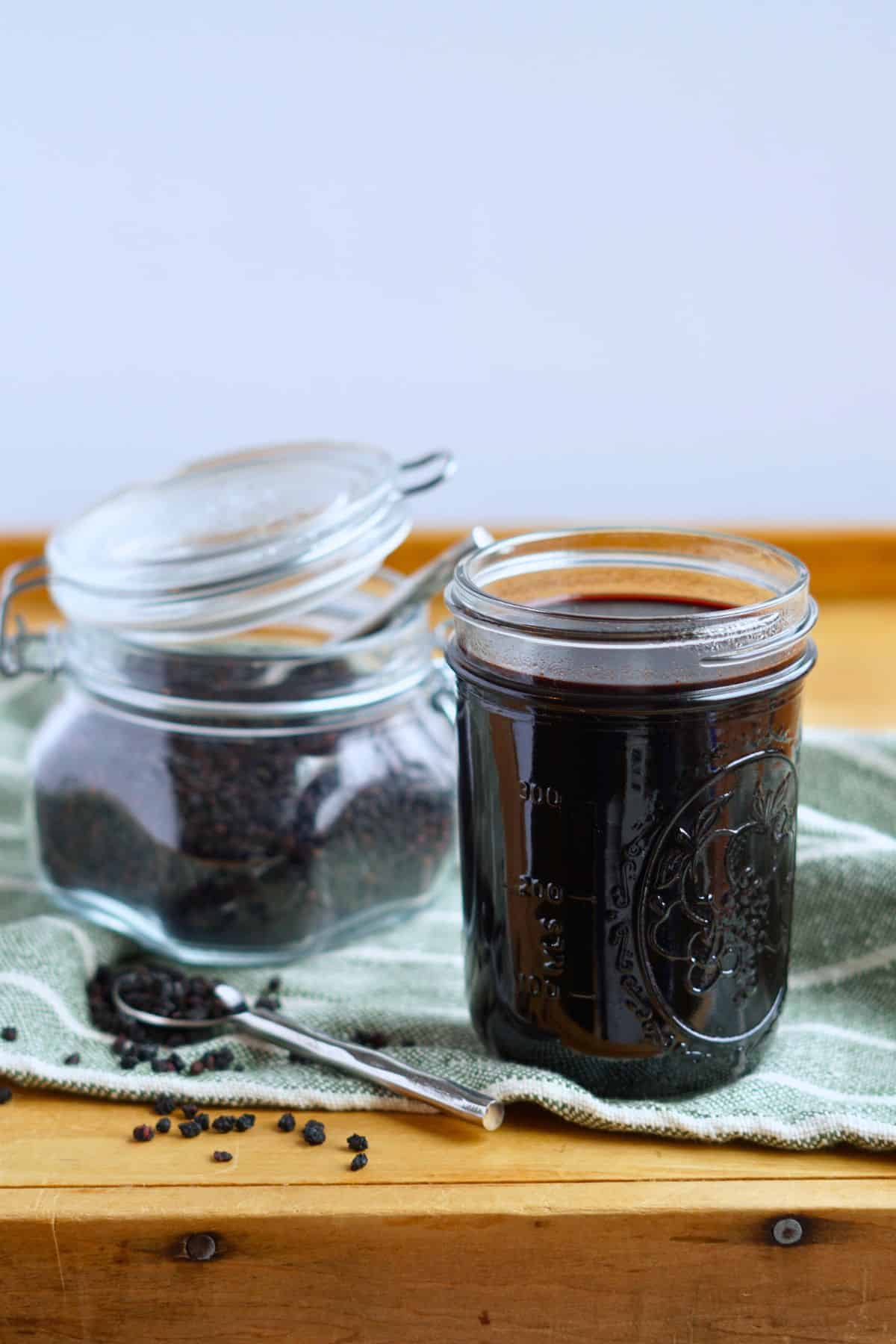
Definitely! The fresh berries will contain much more liquid than the dried alternative.
To accommodate for this, use 1 quart (4 cups) of fresh berries with ¼ cup water.
Mash the berries in the pot to release their juices, then add your spices and cook.
Where Can I Find Fresh Elderberries?
You typically can’t find fresh elderberries in stores, so you can either forage for them locally or grow them yourself.
If foraging, you’ll have to ask around for acceptable locations and make sure to consult with a local expert on how to identify them properly.
If you’re curious about growing them yourself, you can likely purchase one at a local nursery or start one from a cutting of a mature plant.
In both cases, make sure to remove all the leaves, stems, and unripe berries before cooking as these are the most toxic parts of the plant.
Do I Have To Use Honey?
While I use raw honey for its wonderful health benefits and taste, it is not necessary for this recipe.
You can decrease the amount of honey or omit the sweetener entirely if you wish, but know that it will not have as long of a shelf life.
You can swap the honey for maple syrup or agave nectar for a vegan substitute or if you’re making this syrup for infants under 12 months.
If you have diabetic concerns, agave nectar has a lower glycemic index compared to honey and maple syrup, but all are added sugars nonetheless.
You may want to opt for no added sweetener if you are concerned about raising your blood sugar.
Can I Use Other Herbs or Spices?
Absolutely! This recipe can be modified to your taste preferences.
Play around with the amounts in this recipe or add something new. If I have some fresh sprigs of thyme or rosemary, I often add those to the pot as well.
If using powdered spices or herbs, I recommend starting with ½ teaspoon of each.
You can omit the spices and herbs entirely if you wish, but you know you’ll be missing out on so many great health benefits.
Is It Okay To Take Elderberry Syrup Every Day?
Yes, it is safe to consume elderberry syrup every day, as long as the berries have been properly cooked.
For personal dosing, it is best to consult with an herbalist or healthcare provider.
As an adult, I take 1 tablespoon daily and give my toddler 1 teaspoon daily.
If experiencing symptoms of sickness, we increase this dose to 3-4 times a day.
What Can I Do With Leftover Elderberry Pulp?
Once cooked down, most of the nutrients are extracted into the juice. The remaining pulp can be discarded into the compost bin.
But if you’re looking to reduce your waste, I have heard of some people adding small amounts of leftover pulp into their smoothies.
I have also seen others add the pulp into a jar and fill the rest of the container with apple cider vinegar. This creates an infused vinegar that is great for making vinaigrettes, cocktails, or other concoctions.
Are Elderberries Safe For Kids To Eat?
This recipe contains honey, which is not safe for infants under 1 to consume as it may cause infant botulism.
This serious illness results from Clostridium botulinum, a toxin-producing bacteria that can sometimes be found in honey and that infants are unable to fight against.
If your infant is eating solid foods and you want them to receive all the immune benefits, it is generally safe for children over 6 months of age to consume cooked elderberries and their juices (with no honey added).
Are Elderberries Safe to Eat During Pregnancy or Breastfeeding?
Currently, there is very limited research reported on the use of elderberries during pregnancy or breastfeeding.
At this time, it is recommended to avoid elderberry and its products while pregnant or breastfeeding.
Who Should Avoid Eating Elderberries?
If you are on prescribed medications, please speak with your healthcare provider before consuming elderberry products.
As elderberries have immune-stimulating properties, they may interfere with medications taken to suppress the immune system.
Elderberries also have a natural diuretic effect, so speak with your healthcare provider if you are taking medications that increase your urination.


Leave a Reply